

When Words Fail: Ask Ayn
Often, 'misstating the obvious' makes a statement of its own.

An occasional feature with our friend, Ayn Landers. Paid subscribers are invited to put their questions in the comments.
Dear Ayn,
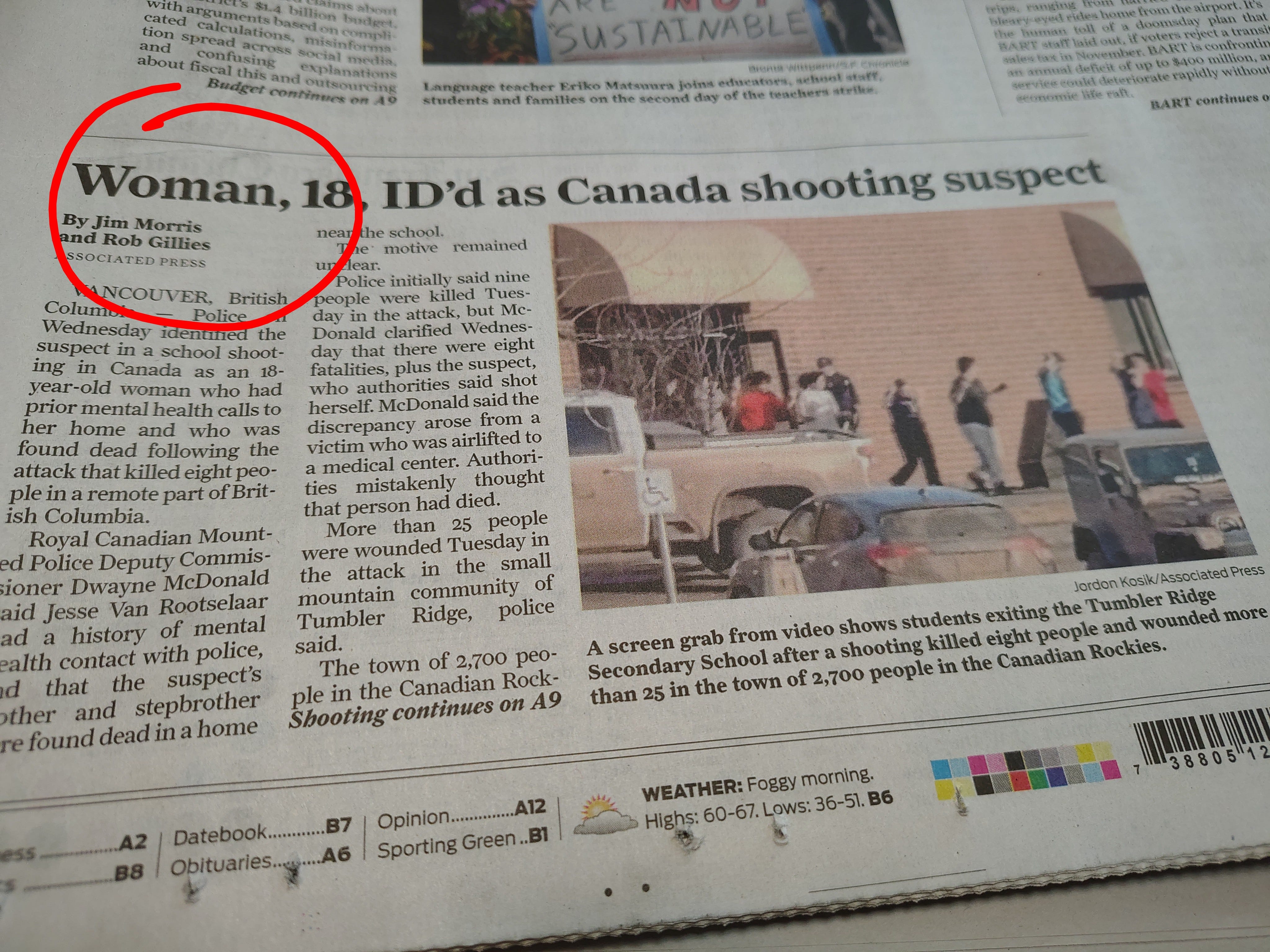
I’ve long been a reader of print news, but lately, I just can’t square the words on the page with that thing I used to call “reality.” For instance, there’s the case of the tragic mass school shooting in Tumbler Ridge, British Columbia, with 25 injured and 9 dead, and an alleged shooter described in the press conference itself as a “biological male.” Yet the editor of the story decides to prioritize the word “Woman” in this headline?
Sincerely,
Typographically Challenged
Dear Typo,
It looks like this is an Associated Press story that ran in many places under different headlines, which often happens. Local editors make adjustments for space and editorial focus, etc. PBS Newshour ran the story, but went with the headline “Suspect in Canada school shooting is identified as 18-year-old who had prior mental health calls,” clarifying there was a mental health angle involved. The Bakersfield Californian ran the same story under “Police identify suspect in Canada school shooting as 18-year-old,” drawing our attention solely to the age of the suspect: an adult, just barely.
But when the San Francisco Chronicle printed that article under the title above, “Woman, 18, ID’d…” it’s telling us something else altogether. It wants us to know they will prioritize the feelings of a mass killer over a commonly accepted reality of humankind for millennia.
Why?
To simply show you they can.
I once learned from editors that a headline should clarify, not obfuscate. In this case, the editor really wanted to clarify one thing in particular: That it’s the newsroom — not you and not even the writer of this story — that has the ability to “name” things. Remember “words are violence” and “violence is speech” if they say so. (And yet necessity is the mother of invention in these odd ages for language: It was reported officials in an early alert and subsequent press briefing called the shooter a “female in a dress” and a “gunperson,” tipping off the public to a particular shuffling of reality that was at play.)
By the time this headline landed, it was a widely distributed fact (noted in the above video of the press conference about which this article reported) that the alleged shooter was born male, had multiple mental health and police encounters, and had transitioned to using the word “female” as a self-description.
The fact that you, dear reader, already knew this at the point of newspaper purchase is most likely the point.
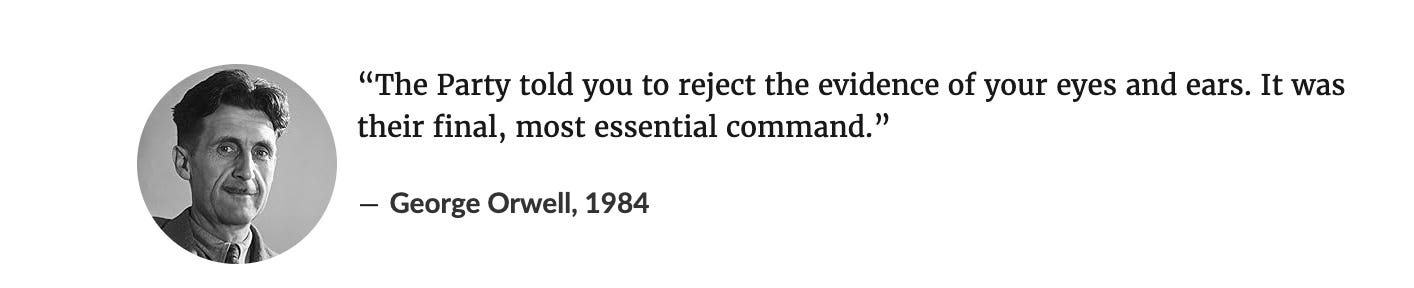
Yes, newspapers get things wrong all the time. Sometimes spectacularly.
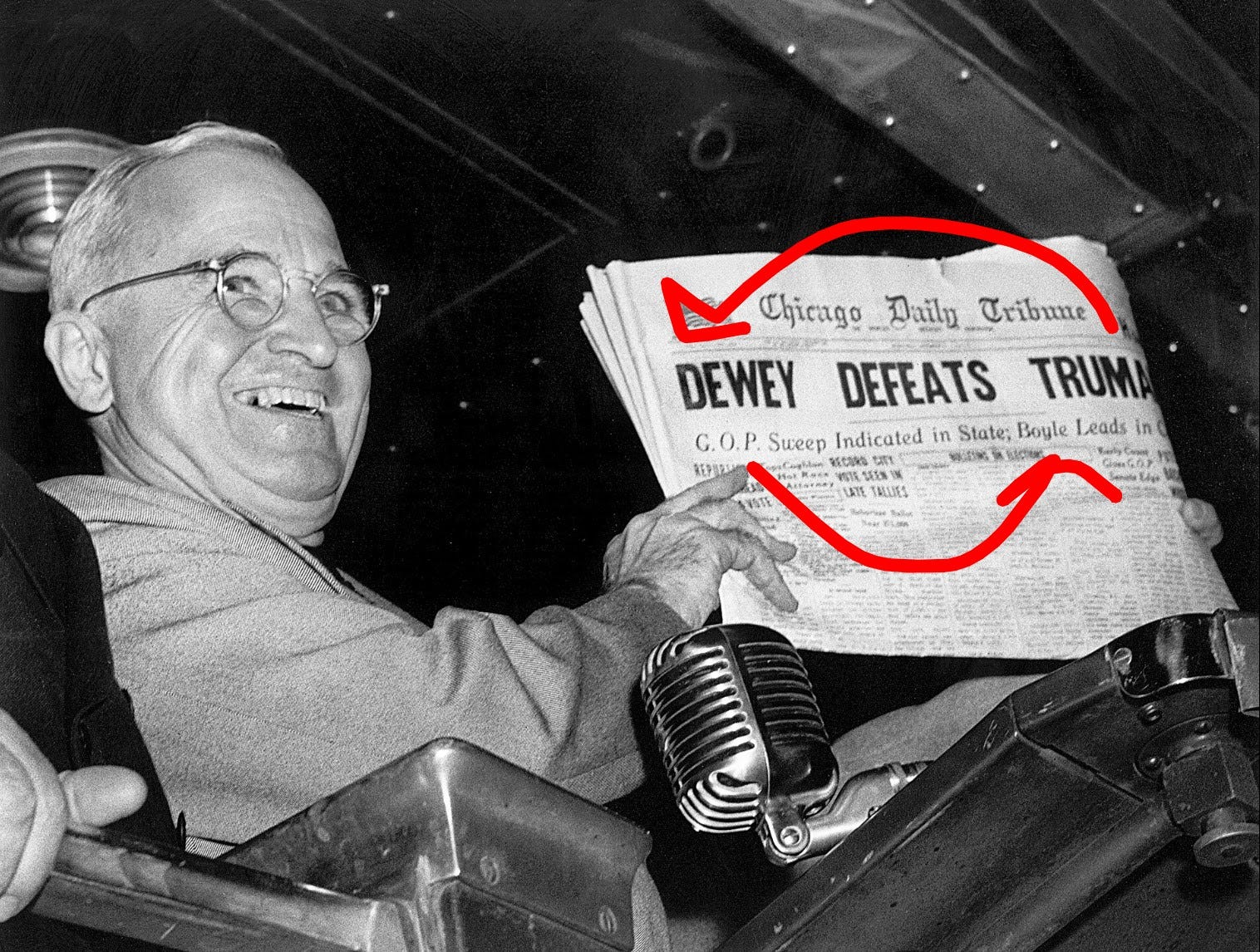
I’ll bet the San Francisco Chronicle would say it got this one right though. They’ve got a deep blue city to protect from the truth.
They’re out on a limb, however. Even the BBC has shifted gears and isn’t afraid to use their words to describe what was actually said in the press conference.
“Van Rootselaar was born a biological male, but identified as a female, authorities said.”
If we cannot read these words, we cannot detect a pattern. And that is exactly the point as well.
I do have some advice for you, Typo. You have the ability to use words, and the ability to type them out and press send. Communicate your confusion to the newspaper editors yourself, to he/him, she/her, they/them or to whom it may concern in the plainest language possible.
A productive feedback loop has to start somewhere.

Thank you, Ayn. Unfortunately, I have come to expect this level of propaganda from the San Francisco Chronicle. But can you help explain why the Wall Street Journal (previously a legitimate source of news) fails to identify the shooter's gender at all as either male, female, or any other definition? This is an impressive Orwellian example of a "news" article that says more by what it doesn't say.
https://www.wsj.com/world/americas/accused-canada-shooter-an-18-year-old-known-to-police-authorities-say-53fbcaf6?st=QsefQp&reflink=desktopwebshare_permalink